






Kia Canada
See prototype
Helping customers make informed decisions through a connected car-buying journey
Client
Kia Canada
Date
February 2024
Contributions
UX Research, A/B Testing, Wireframing, Rapid Prototyping
Team
5 Designers (Raymond C, Lori J, Angela L, Christy F)
How It Started
"The information I saw online didn’t match what the dealer told me later."
One of my friends shared their experience looking for a car to buy at Kia and noted their frustration with missing pricing details when comparing vehicles on the Kia website. Bringing this insight to the design team, I proposed it as a potential area to address through experience design.
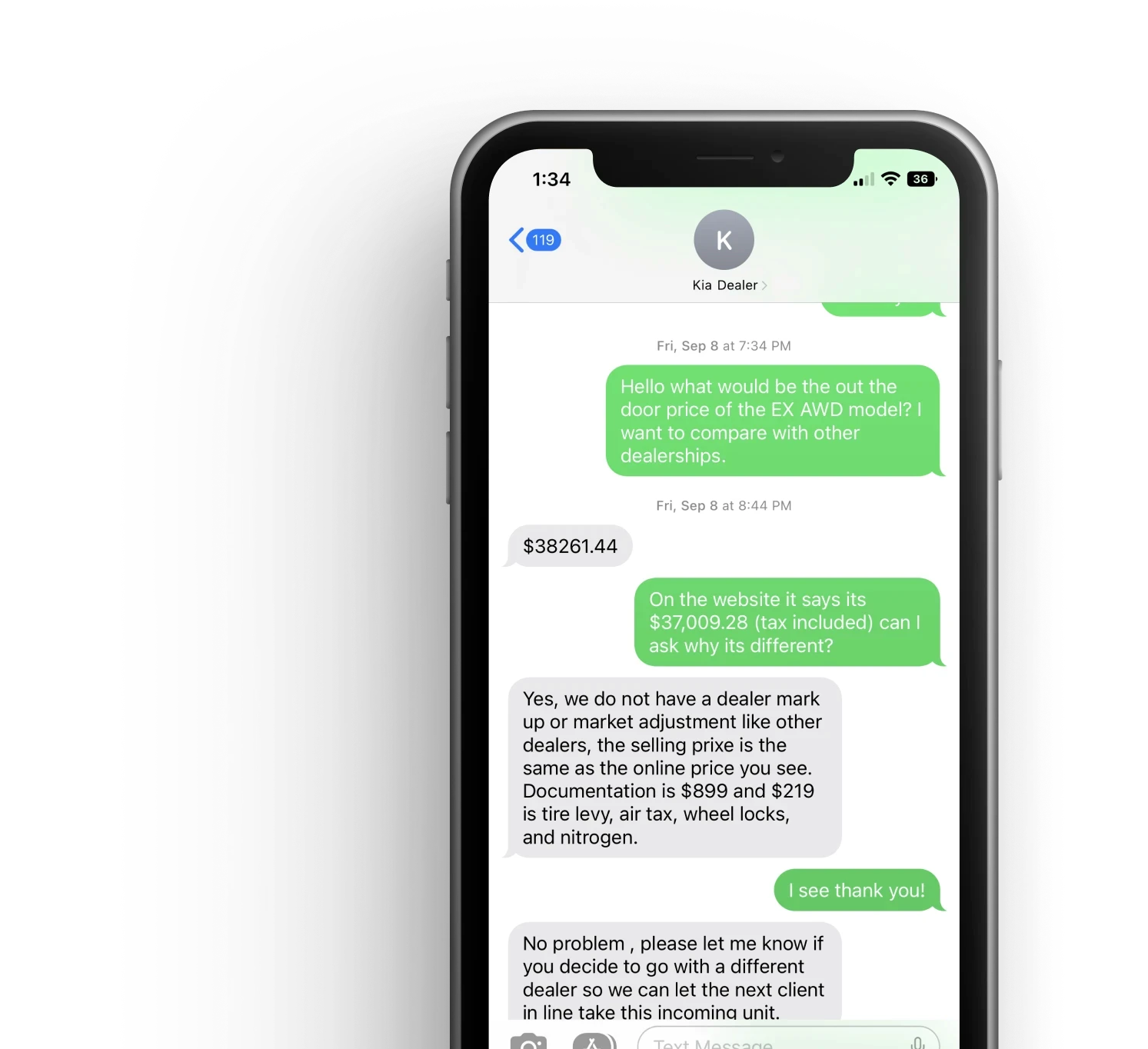
Friend's text with a Kia dealer
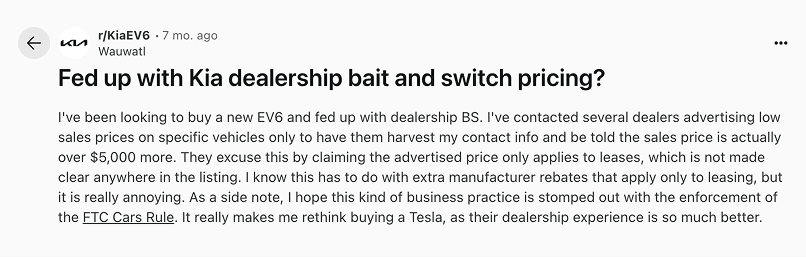

Reddit posts on Kia dealerships
But was this problem worth pursuing? We needed more research insight
Taking a look at vehicle studies, Kia ranked 1st in vehicle dependability, yet last in customer satisfaction, revealing a clear disconnect between product quality and the purchase experience. This gap highlighted an opportunity to reduce friction and rebuild trust across the customer journey.
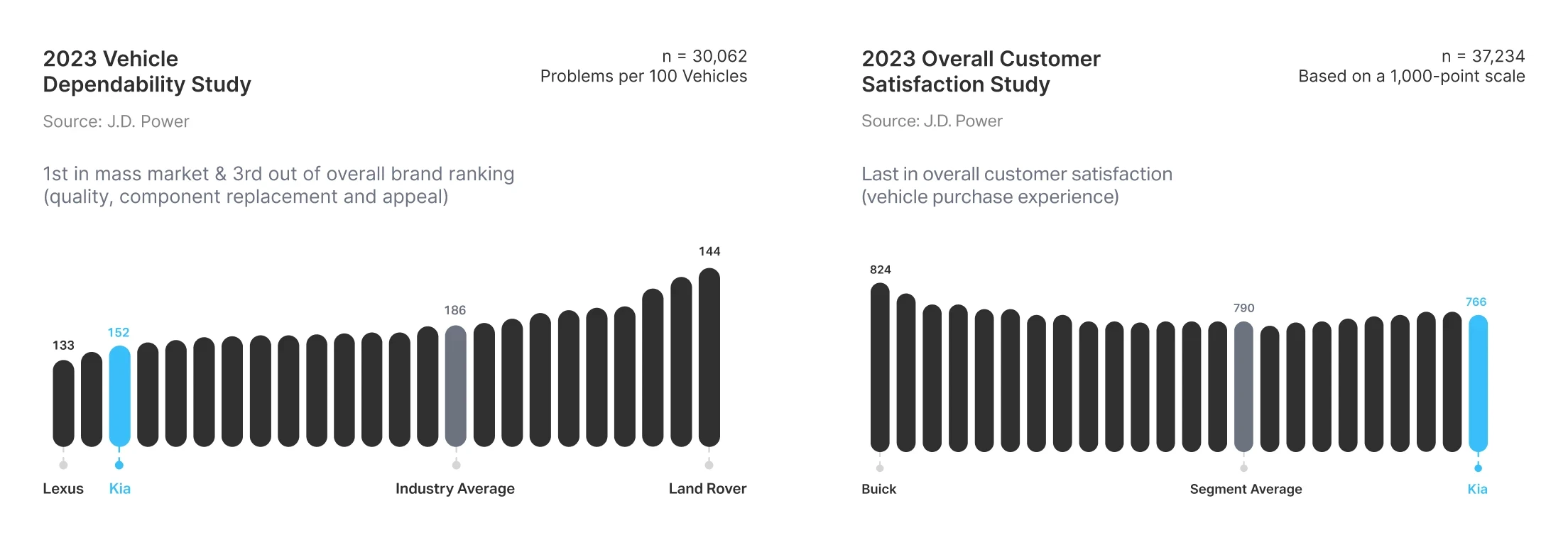
Studies from J.D.Power, A Pioneer In Use of Big Data and AI For Consumer Research
My contribution to the project
I led research synthesis across industry studies and a survey of 16 prospective car buyers, identifying pricing transparency and the disconnect between online research and dealership visits as key challenges. I translated these findings into connected customer and dealership workflows, designed high-fidelity prototypes, and helped conduct A/B testing with seven participants to refine the final experience.
Preview Snapshots
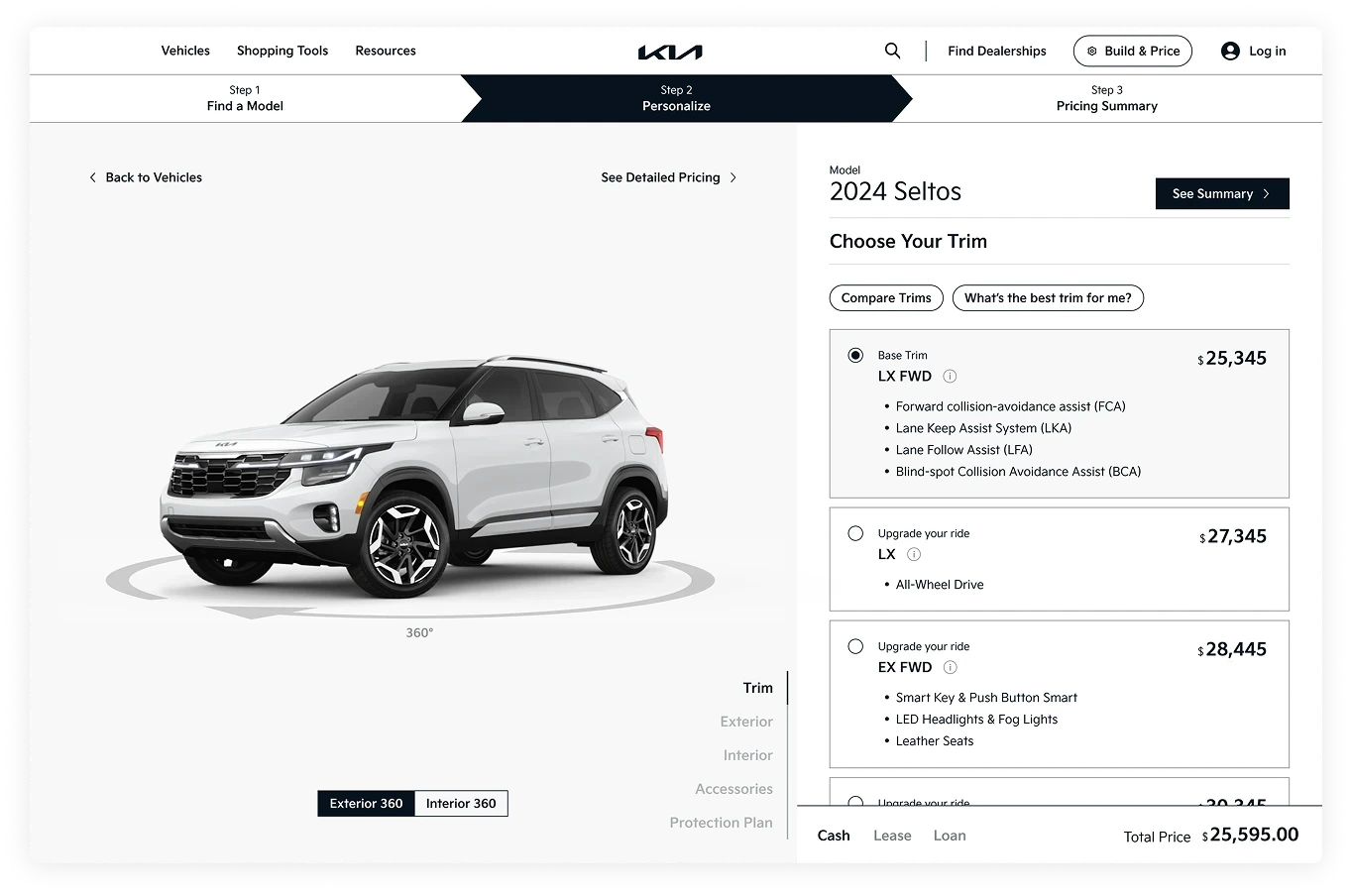
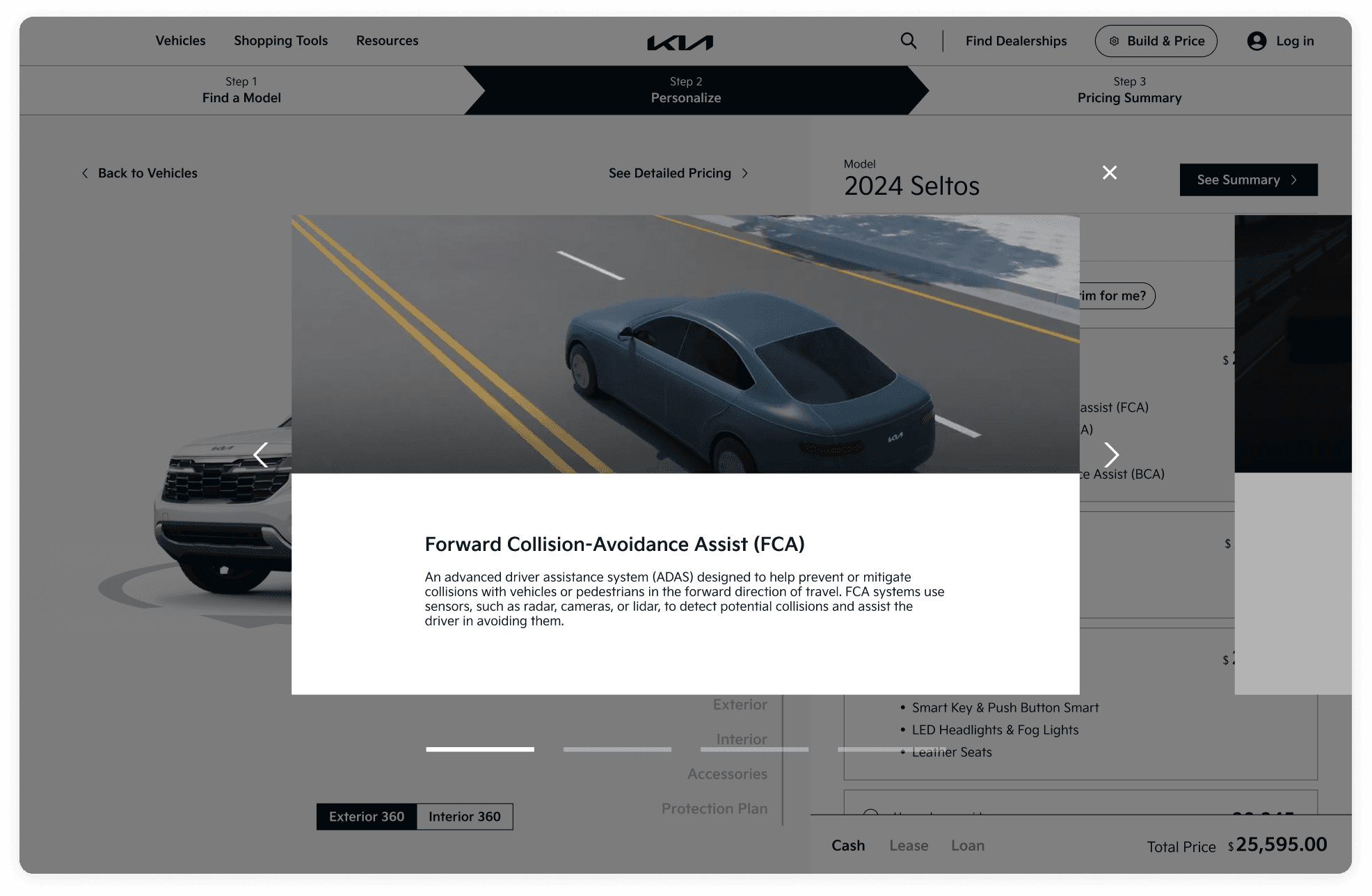
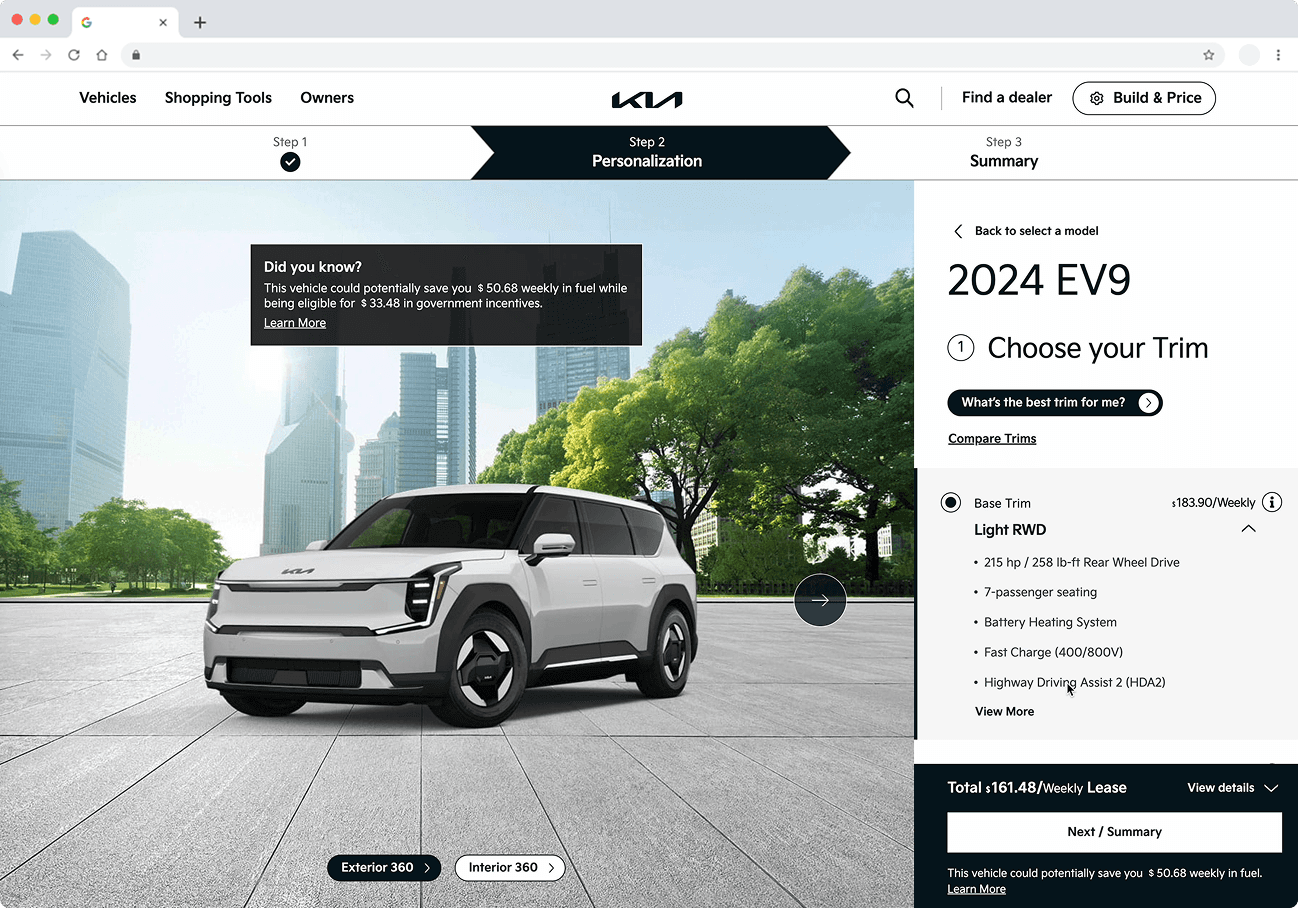
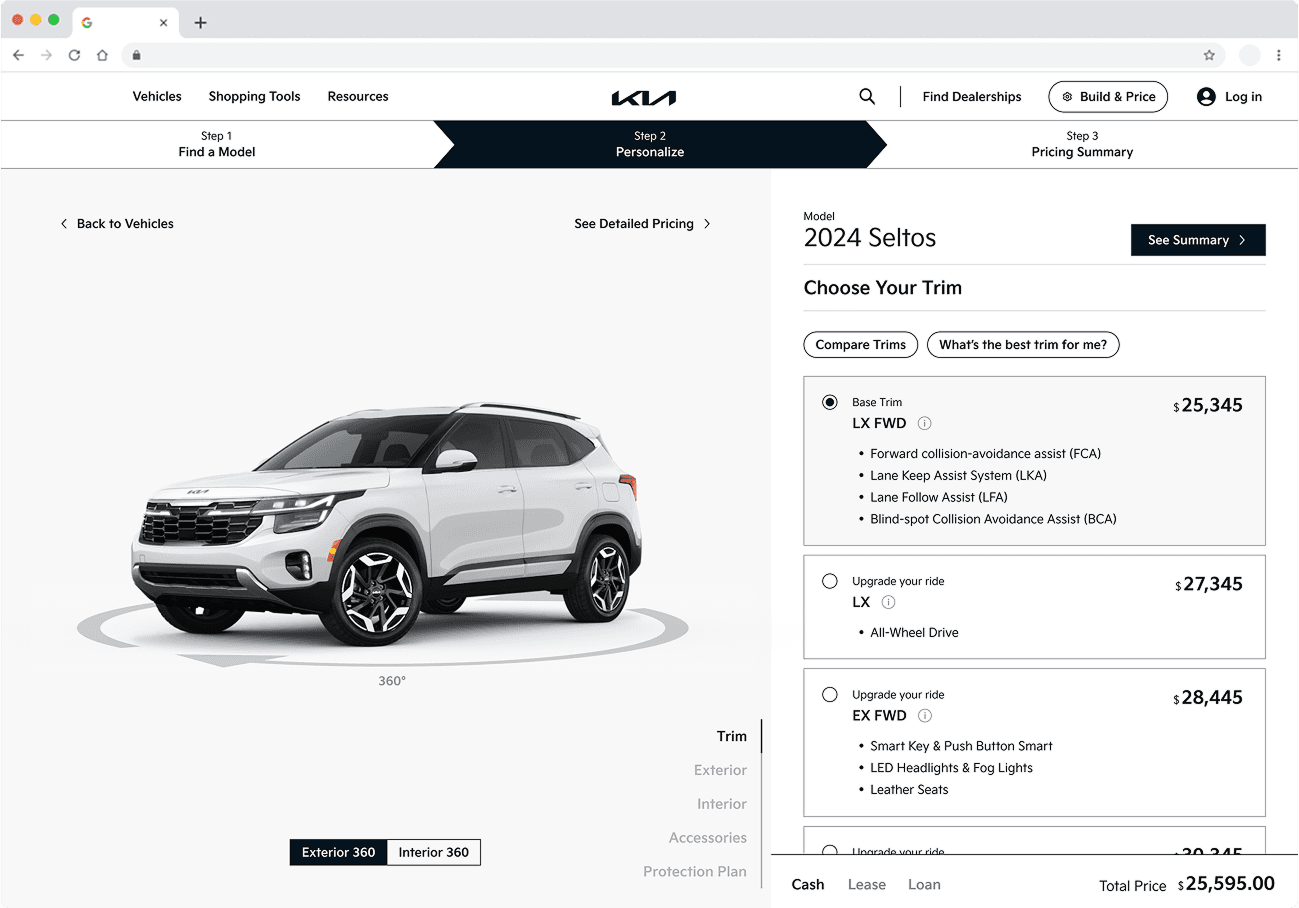
Vehicle Customization Page
Customization flow with clear navigation, simplified options, and live price updates
Feature exploration made easier and pricing details more accessible. Key improvements include a simplified layout, clearer visual cues, and reduced side-scrolling.
Configuration Comparison Page
Transparent pricing tool with side-by-side vehicle comparison with detailed breakdowns
Users can save their personalized builds and compare the pricing and features of configurations side by side, allowing them to see the value of each option.

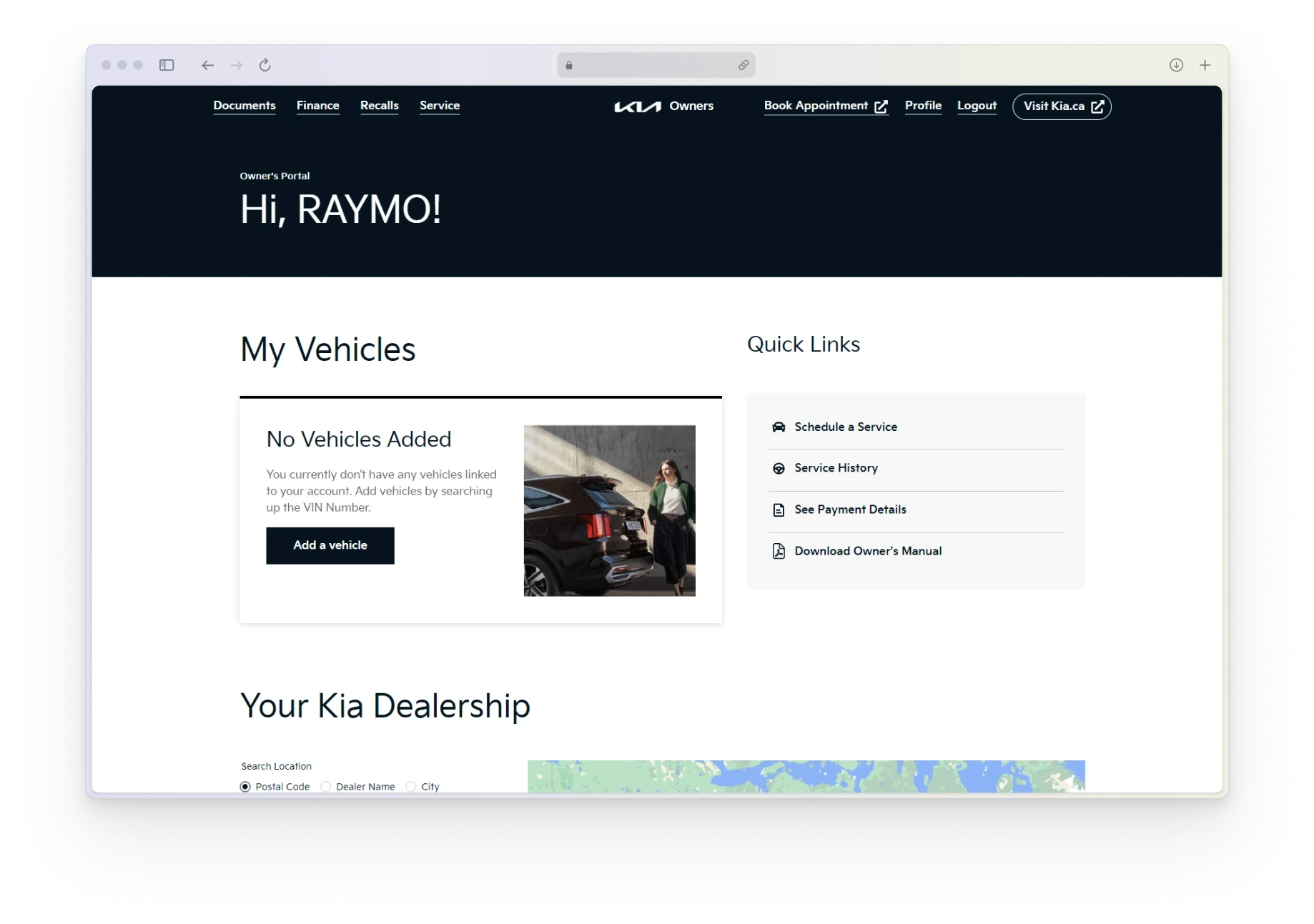
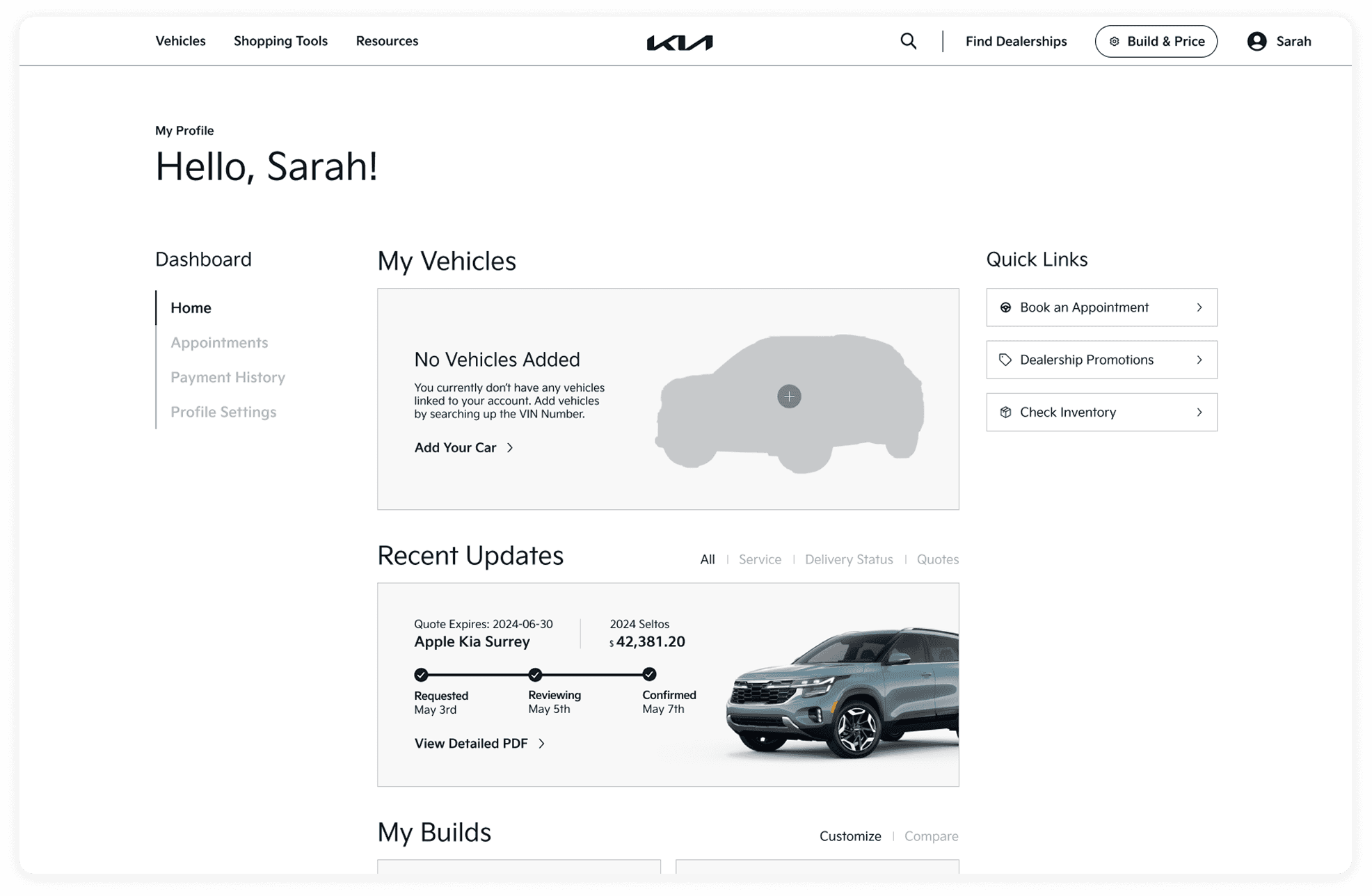
User Profile (Owner's Portal) Page
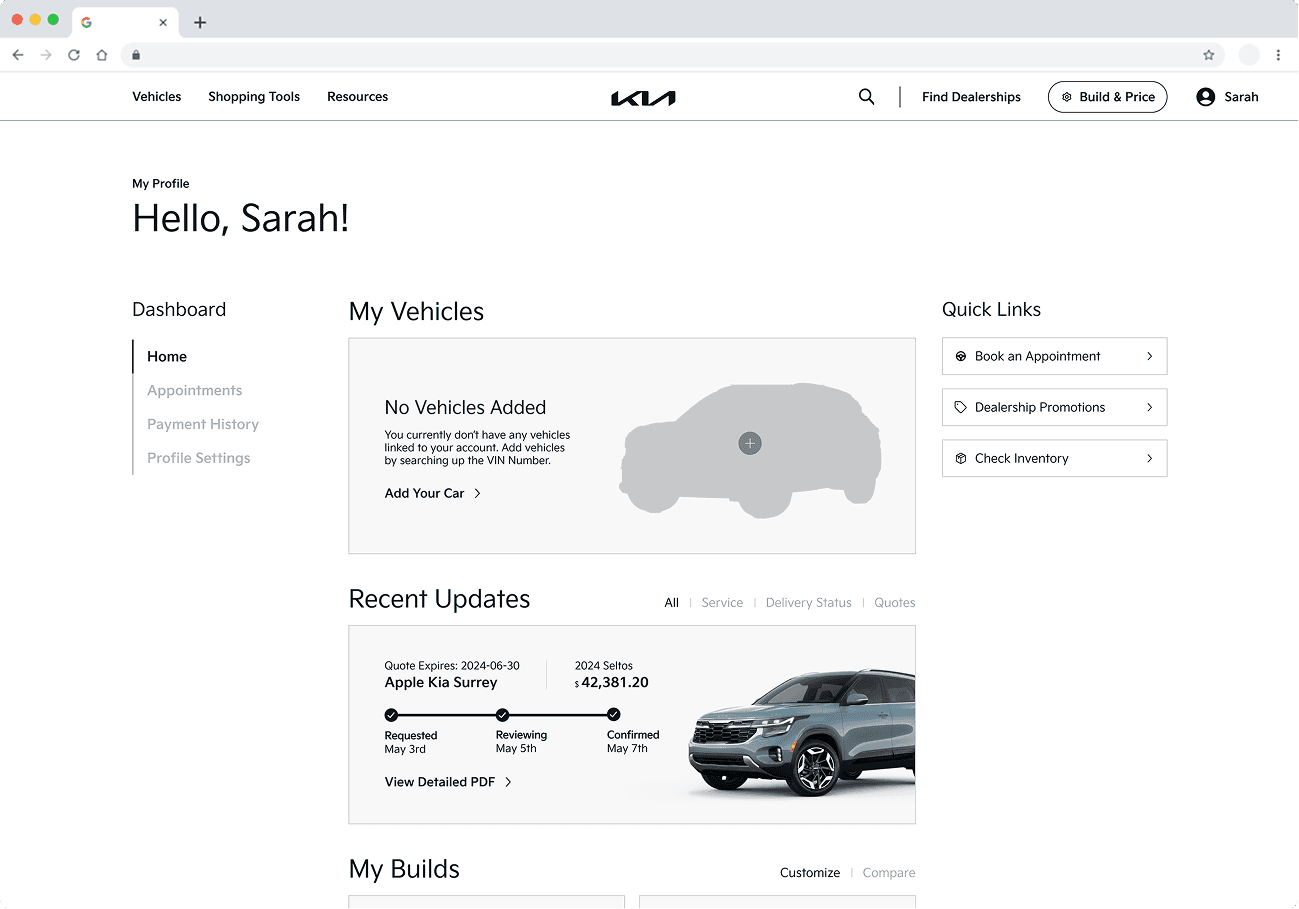
Unified user portal to access saved builds, live quote status, and post-purchase actions
The updated user portal integrates both pre and post-purchase experiences, creating a connected journey from start to finish.
User Research
Industry Research
Understanding friction across the car-buying journey
The team had limited first-hand knowledge of the car-buying journey, so we began with secondary research to understand the broader journey beyond Kia's website. We reviewed industry studies, journal articles, and credible reports to identify common pain points of car buyers.
Digital retailing is growing, but the in-person experience remains important
A large proportion of buyers visit in person; 85% visited a dealership during the purchasing process.
Source: J.D. Power
Many car buyers don't feel informed enough to decide confidently
Distrust creates friction, with 83% of buyers reporting that they do not trust or only somewhat trust the salesperson.
Source: Ipsos
Lack of trust in dealerships is a major barrier to purchase
55% of recent buyers from the dealership felt insufficiently informed to make a confident decision.
Source: Ipsos
Website Audit
Where does Kia's current site fall short?
We then audited the Kia website from a customer's perspective to see how it addressed or worsened these pain points. The audit revealed four usability issues across the online purchasing journey.
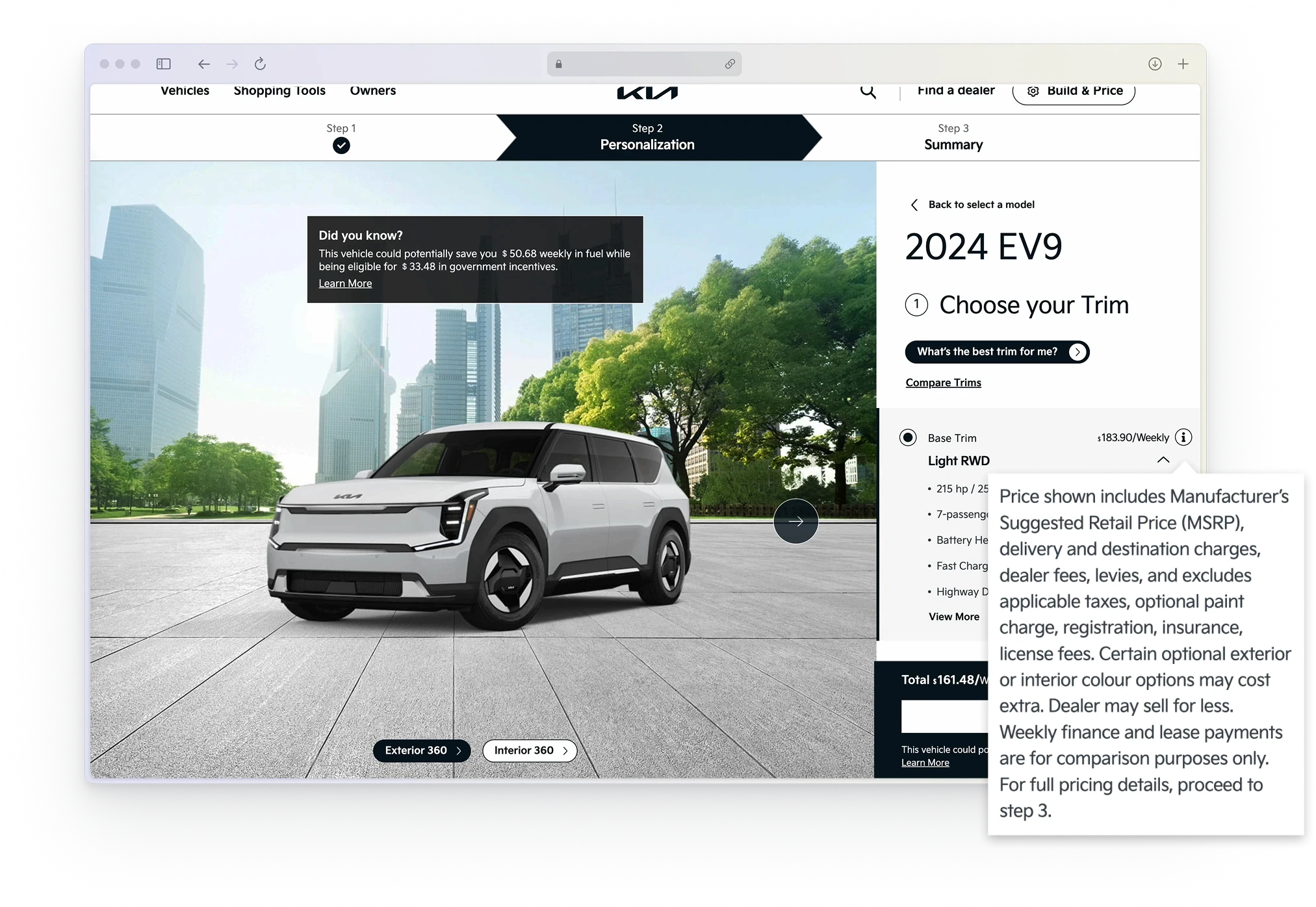
A. Long and hard-to-read texts about important pricing details
B. Weak inventory visibility with a lack of visual cues and real-time stock info
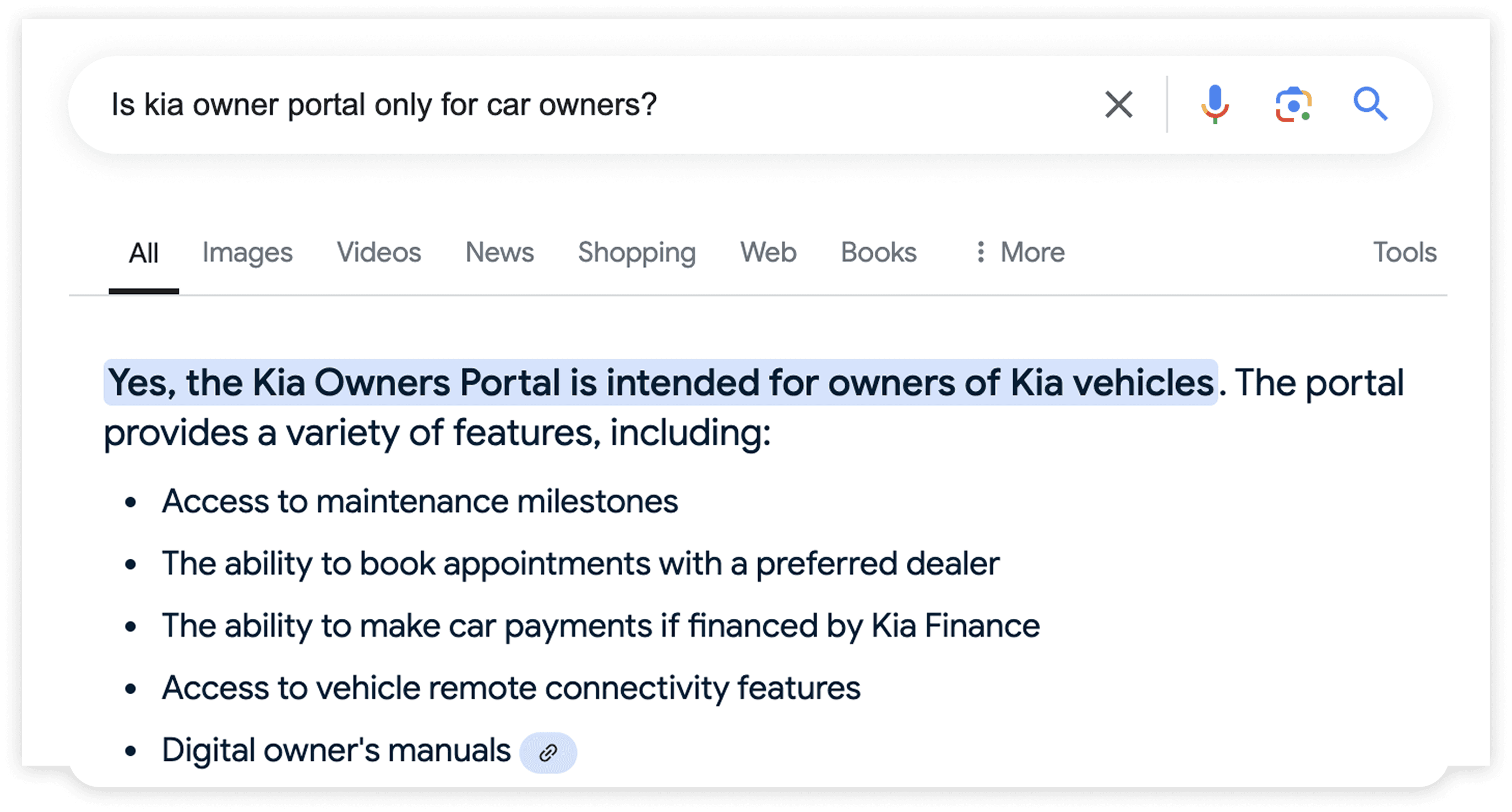
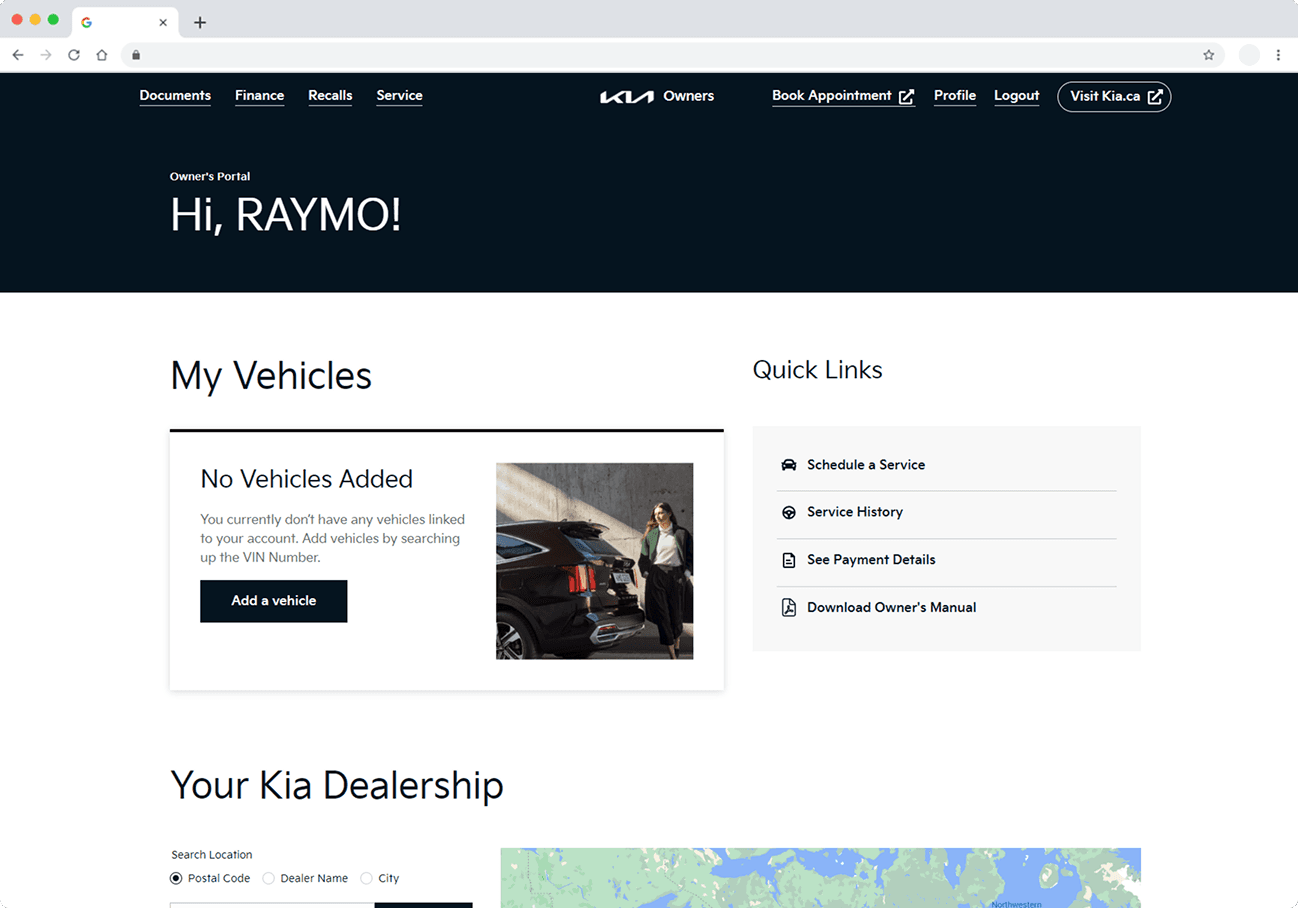
C. Features in the user profile (owner portal) are inaccessible to browsers
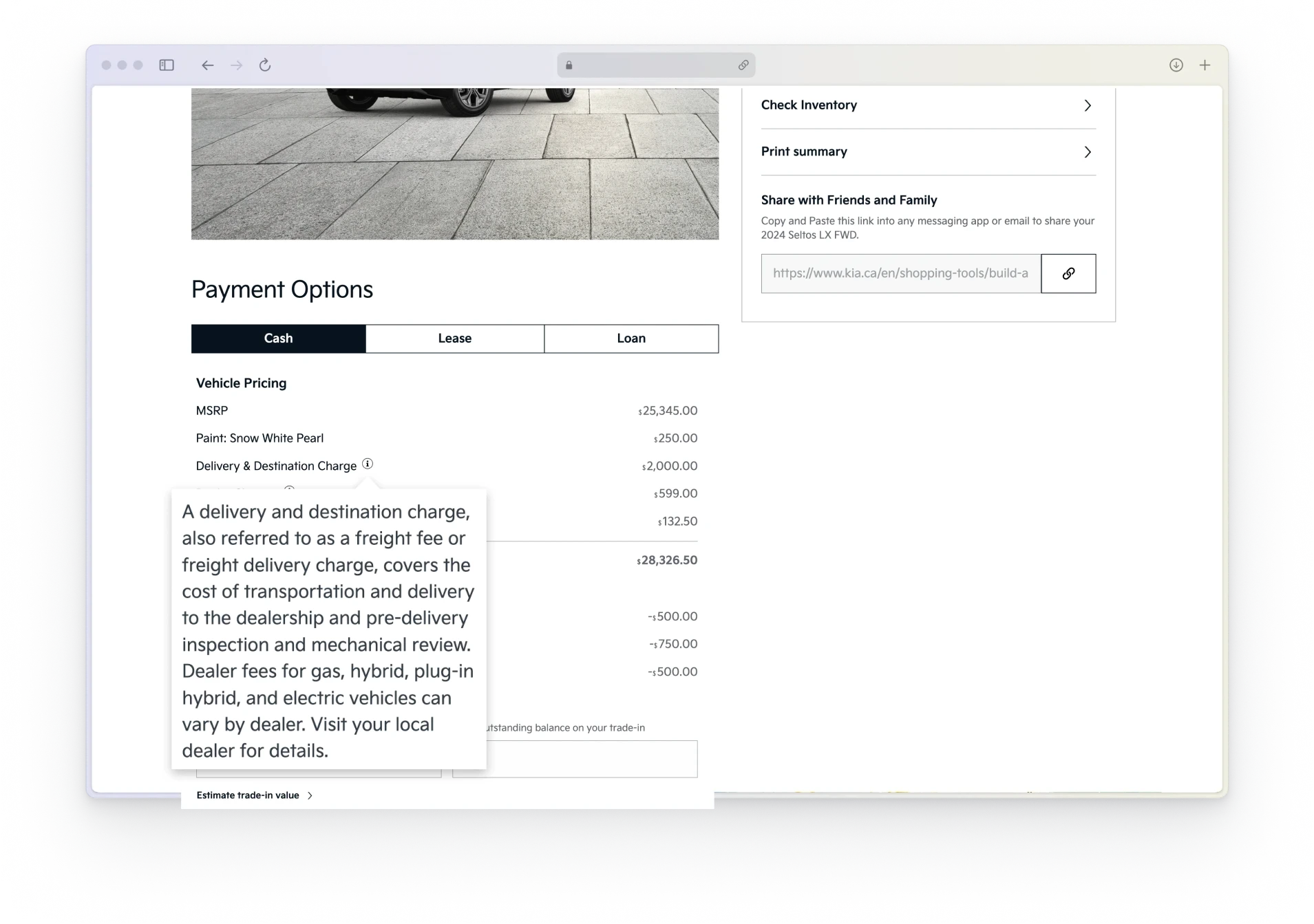
D. Fee breakdowns and pricing details hidden inside small icons as tooltips
Online Survey
What do real car buyers say?
Taking a closer look at past car-buying experiences through a Google Forms survey, we aimed to receive insights from current and former Kia car buyers and customers from other mass-market dealerships. We received 16 responses from individuals aged 21 to 54.
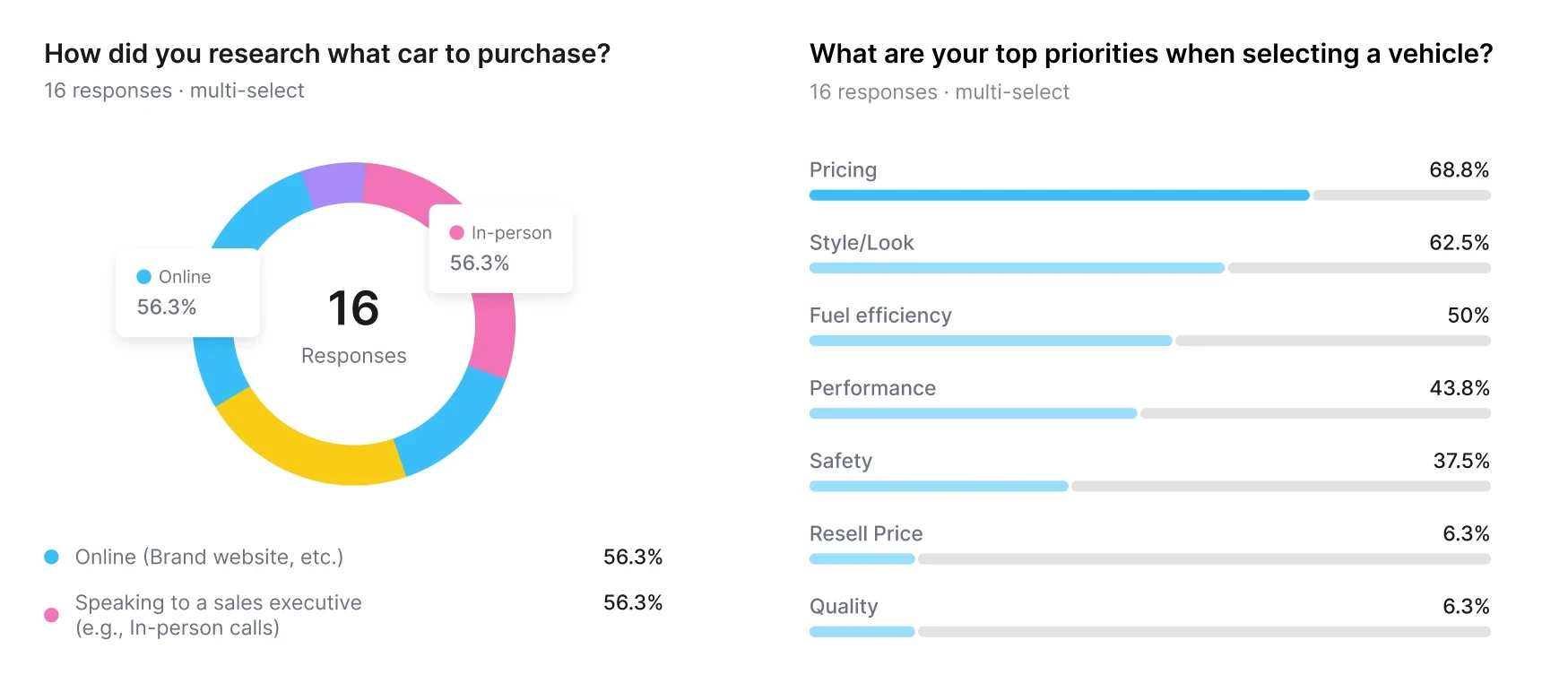
Car buying is a hybrid research experience
Buyers rely on both online research and in-person interactions when making final decisions.
Pricing is the primary driver of decision-making
68.8% of respondents ranked pricing as their top priority when selecting a vehicle.
Competitor Research
We took a look at automakers who ranked higher in customer satisfaction
We reviewed competing automotive websites to understand how they supported vehicle discovery, comparison, customization, pricing, and the transition to a dealership. This helped us identify common patterns, opportunities, and gaps in Kia’s existing experience.
Buick
Ranked #2 Vehicle Dependency, Ranked #1 Customer Satisfaction

Inventory easier to narrow and compare without opening each vehicle individually
Design Takeaway
Comparison tools to compare models
Vehicle price & availability are easy to scan
Detailed inventory filters narrow options
Patterns Observed

Chevrolet
Ranked #3 Vehicle Dependency, Ranked #3 Customer Satisfaction

Clear actions connect pricing to inventory and dealerships
Design Takeaway
Connect pricing to inventory and dealerships
Configuration choices are summarized
Clarifies pricing on fees/estimated payments
Patterns Observed

Mitsubishi
Ranked #4 Vehicle Dependency, Ranked #4 Customer Satisfaction
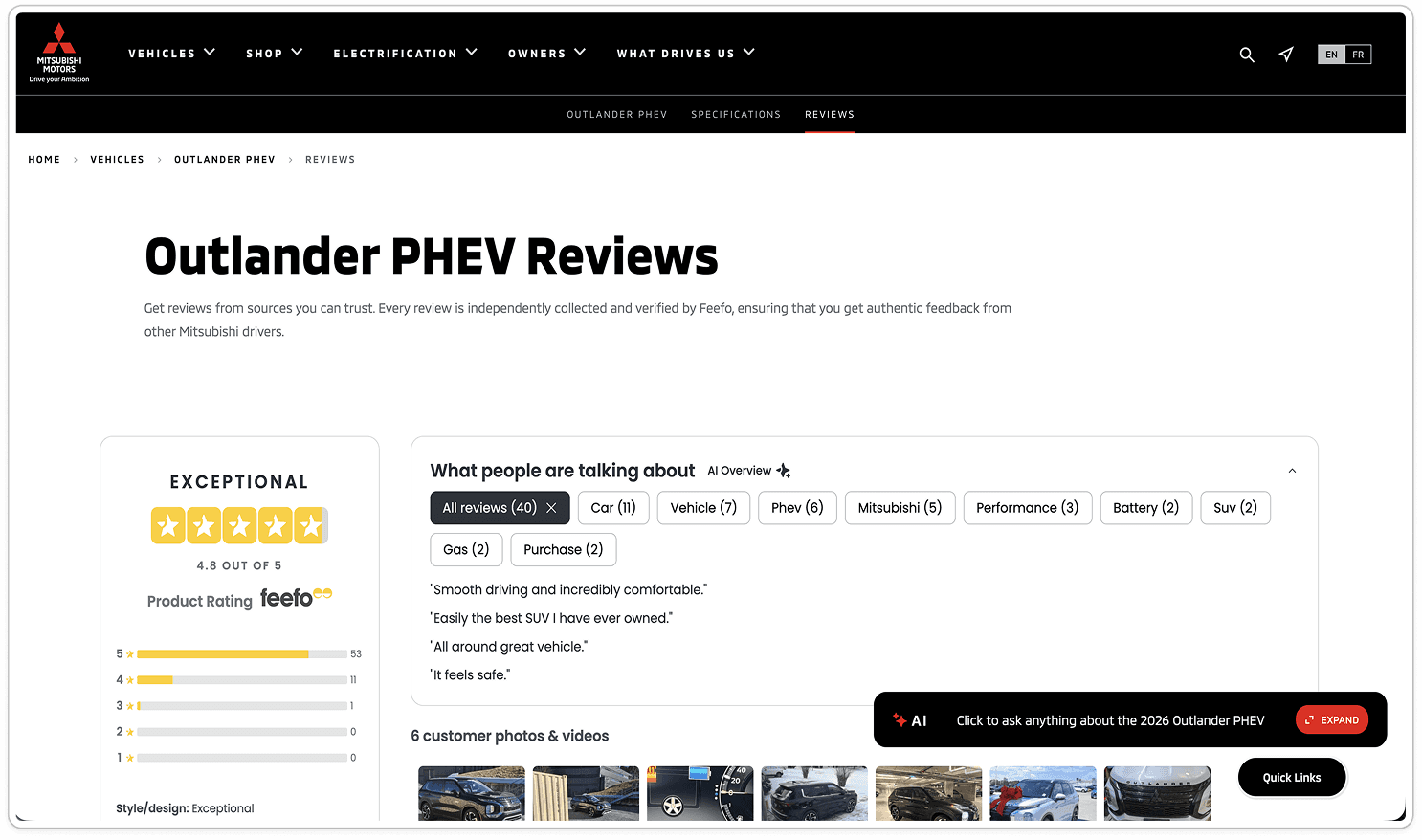
Cedible customer feedback to help buyers evaluate vehicles with greater confidence
Design Takeaway
Photos and ratings add authentic feedback
Reviews filtered by topic & vehicle attribute
Owner reviews for first-hand perspectives
Patterns Observed

What was the big takeaway?
Kia offered a more visually consistent experience, but competitors provided stronger decision-support tools. Clearer inventory filtering, model comparison, pricing breakdowns, and customer evidence could help Kia buyers make more informed decisions.
The Problem
Problem Framing
Research insights helped us focus our challenge and frame our problem
Kia customers encounter uncertainty and transparency issues on vehicle pricing between the online research process and in-person dealership interactions, leading to a lack of trust among customers.
Design Challenge
How might we bridge the online and dealership experience to help Kia buyers make informed purchasing decisions?
Design Process
Workflow Exploration
Identifying design opportunities across the customer pre-purchase journey
With the problem space and design challenge defined based on research, the team mapped the customer journey to identify opportunities for improvement and translated them into early design concepts and sketches.

Sketching Solutions
Generating ideas individually and thinking together as a team
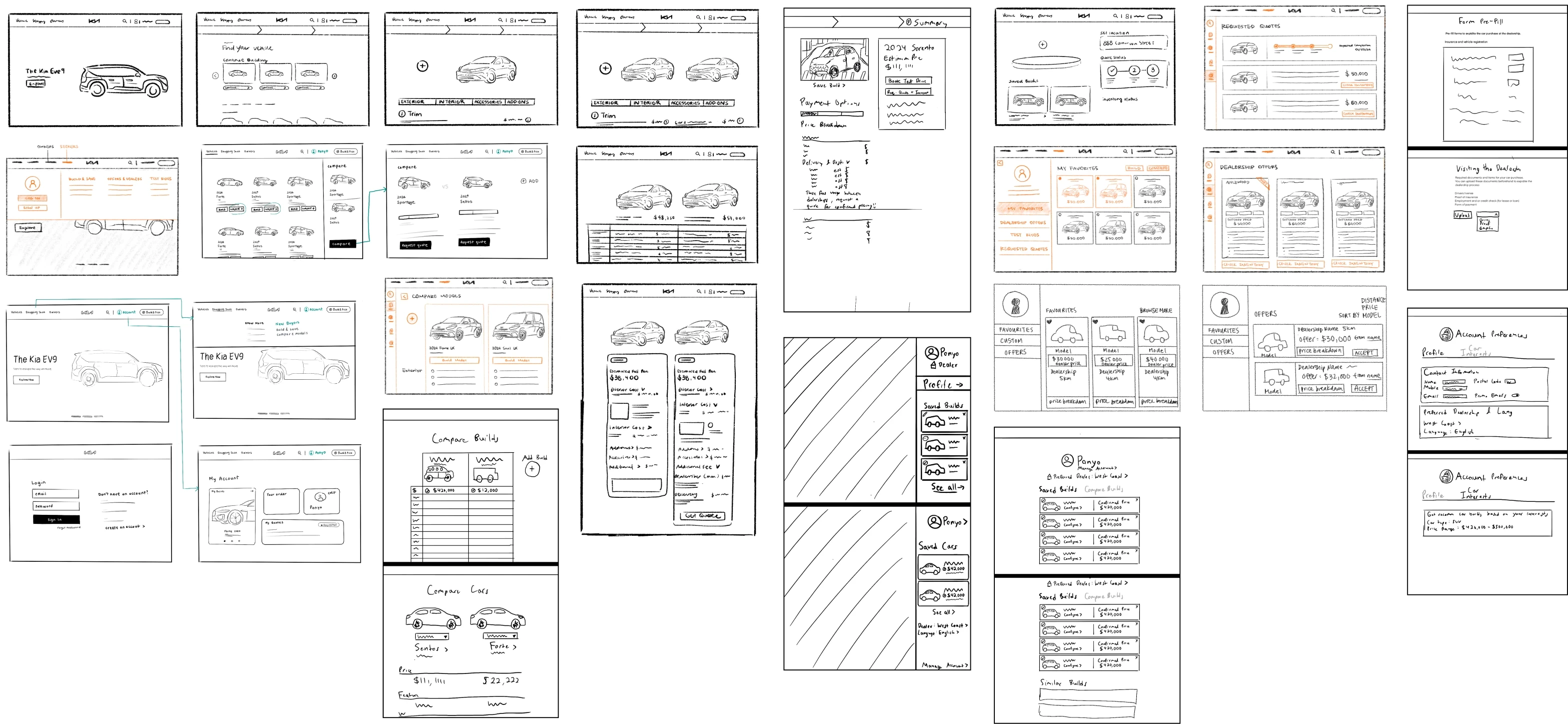
Rather than designing as a group from the start, we began with individual sketching to explore a wide range of ideas. We then came together for a heatmap voting session, placing dots on the strongest elements and consolidating the most promising features into a shared direction.
Wireframe Concept Sketches
Home login
Find vehicle
Personalization
Compare pricing
Pricing summary
User profile
Quotes + offers
Pre-fill forms
Collection of low-fidelity wireframe concept sketches during the heat map voting session
Prototyping & Testing
A/B testing our first design iteration against Kia’s existing website
With our first high-fidelity prototype, we conducted an A/B test against the existing website. Participants were given task-based scenarios across both flows, letting us measure whether our changes improved clarity, confidence, and the online-to-in-person transition.
Usability Testing
See document
Usability Findings
V1: The customization layout made options difficult to compare
The new centered layout reduced horizontal scrolling but made users scroll vertically to see how selections affected the vehicle and price.
Revision
V2: Simplified customization with a persistent side panel
We returned options to a side panel, shortened each section, and added a persistent price summary to reduce scrolling and clarify cost changes.
Usability Findings
V1: New pre-purchase tools in the user profile were hard to find
To stay consistent with the existing profile, placed the new tools below the existing ownership features, but users struggled to find and access.
Revision
V2: Unified the pre- and post-purchase experience
Reorganized the profile to surface quotes and appointments alongside existing tools, making the journey easier to navigate.
Testing Results
The refined prototype improved decision confidence and dealership preparation
Key Design Decisions
Final Design
Simplified vehicle customization with persistent pricing and trim comparisons
Existing Experience
Pricing details were buried in dense text, making it difficult to understand total costs or trims without extensive scrolling.
Final Design
Pricing is now surfaced upfront with clear trim breakdowns and simplified financing options, enabling faster comparison.
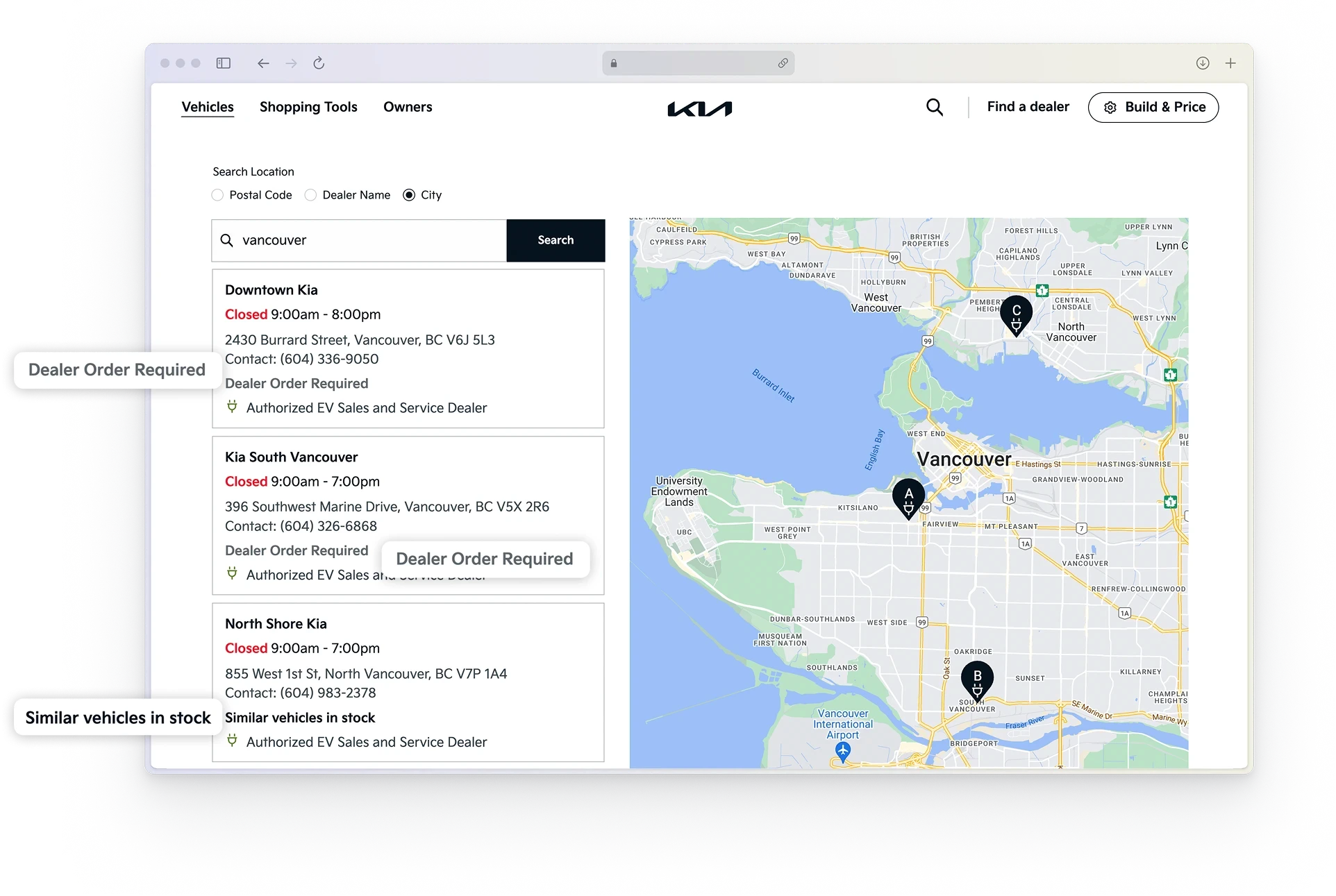
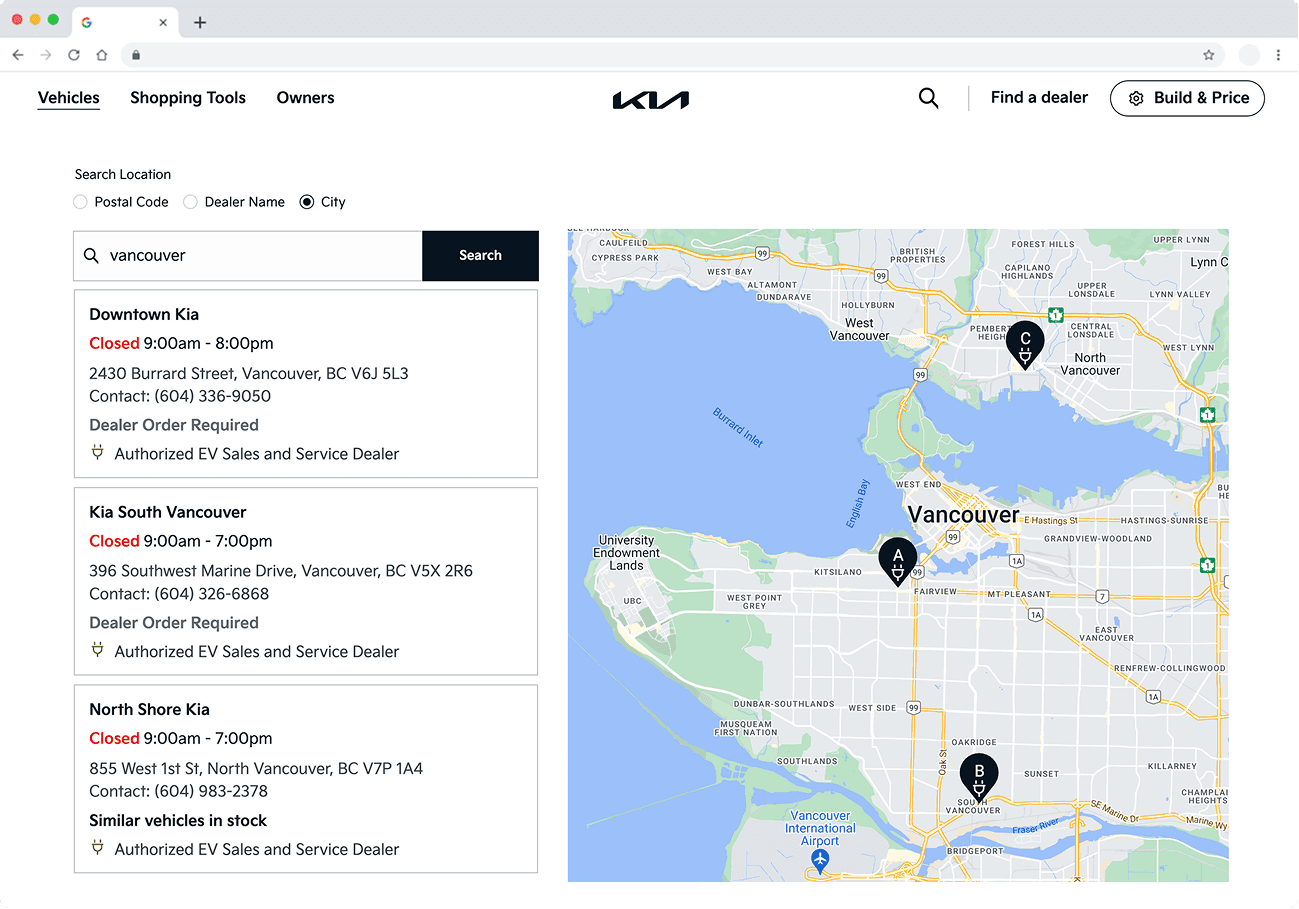
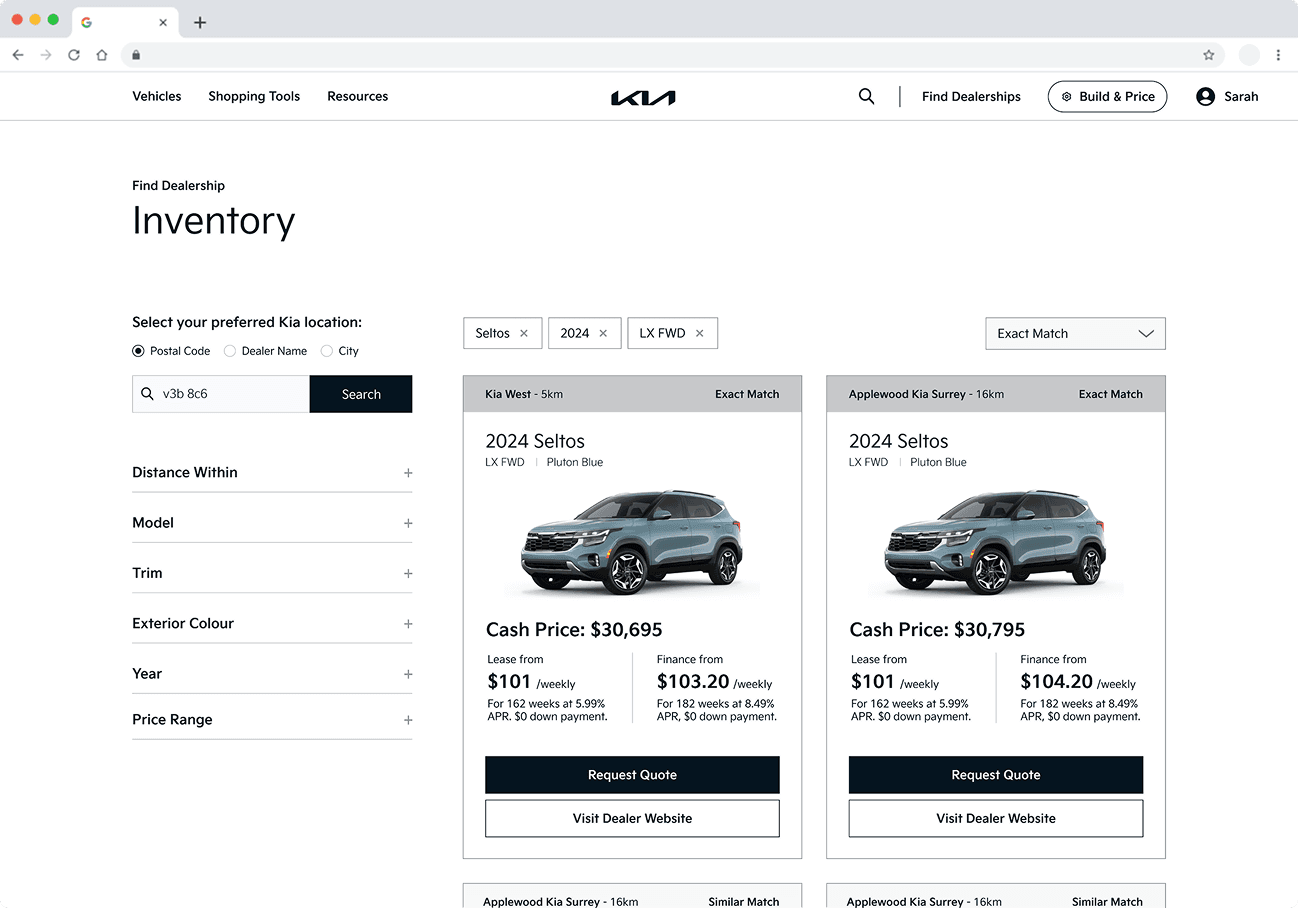
Added advanced filters and real-time pricing to inventory search
Existing Experience
Users were limited to location-based search, with little control over filtering by preferences or features.
Final Design
Added advanced filtering and real-time dealership pricing, enabling more precise and informed inventory searches.
Expanded user profiles for saving builds, tracking quotes, and booking appointments
Existing Experience
Users had no centralized place to track their journey, forcing a disconnect between research, purchase, and ownership.
Final Design
Introduced a unified profile that supports both pre- and post- purchase stages, managing their journey in one place.
Extended Experience
CRM Integration
Bridging the online journey and dealership experience through CRM integration
As an extension of the core experience, we explored how saved customer information could carry over into the dealership workflow, creating a smoother transition from online research to the in-person experience.
User Scenario Videos
Bringing it to life: How does experience works in real life?
To demonstrate how the redesigned experience supports a seamless transition between digital and physical touchpoints, we created a two-part user scenario following the customer journey from online research to in-dealership interaction.
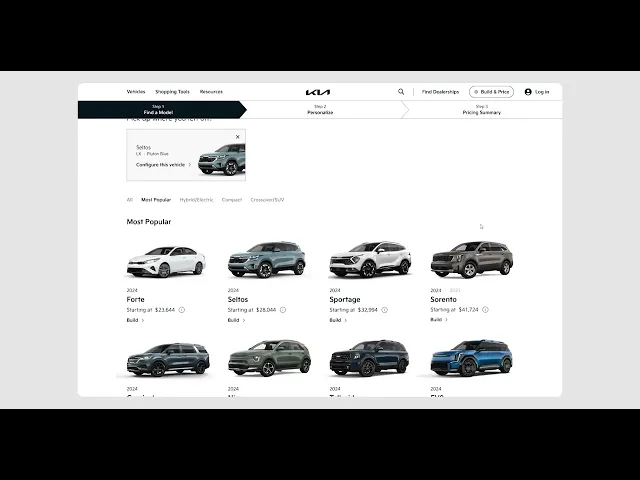
Online: Vehicle Research & Configuration
In-person: Decision & Handoff

Conclusion
Reflection
Learning to navigate uncertainty
This project became one of the most formative experiences of my undergraduate journey. It challenged me to navigate uncertainty, collaborate closely with others, and think beyond isolated features toward designing end-to-end experiences. Through this process, I learned that strong design isn’t just about creativity; it requires grounding ideas in product thinking and balancing desirability, feasibility, and viability to create solutions that truly work in the real world.
A dream team that made the work better
What stood out most wasn’t just the outcome, but the people behind it. Working in a small, driven team created a strong sense of trust and openness, where ideas could be shared freely, and feedback was constant. It felt like a team where everyone elevated each other, turning challenges into momentum and making the process genuinely enjoyable. Kudos to everyone in the team!

The team that made it possible
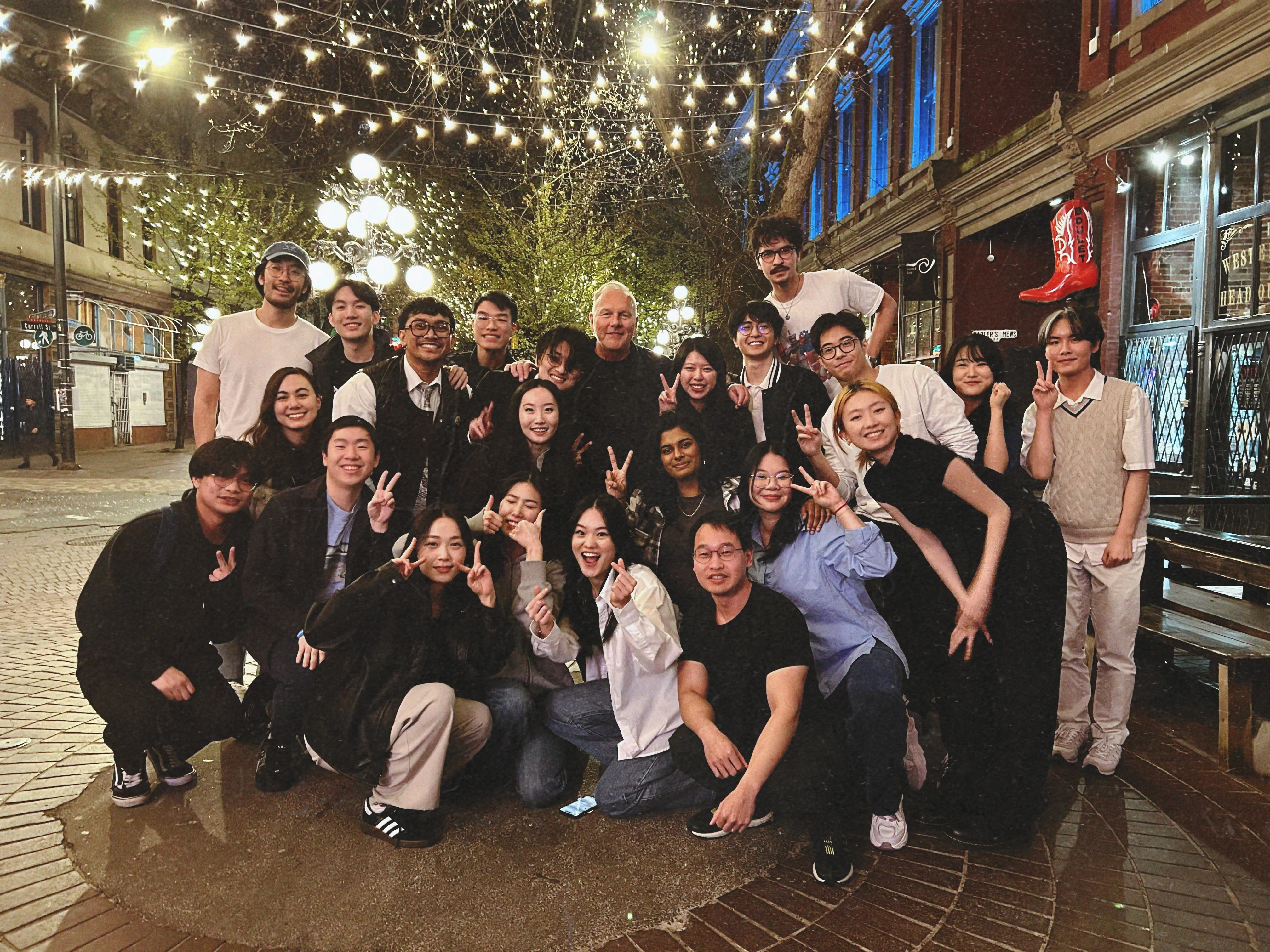
Classmates, mentors, guest critiques, and friends!